Language as a bridge: Why building business fluency matters in design

Picture it: you're ramping up on a new project with tons of meetings filled with marketing execs and C-suite leaders, exchanging internal knowledge that sounds like a secret language you don't understand. Soon, acronyms enter the chat and by the end of the hour, your client is throwing around entire sentences that leave you feeling lost. Forget about your follow-up questions, because asking feels more like admitting you shouldn't have been invited at all. Somewhere between your nervous silence and confused nodding, you've lost your seat at the table without ever leaving the chair. This isn't the result of being a bad designer. It's happening because your design team and your client are speaking two totally different languages.
The UX paradox

As designers, we aim to simplify. Whether it's stripping away jargon, championing plain language, or turning complexity into something real humans can understand, great designers push to create accessible products. After all, you'll never hear a user complain that their checkout experience was too simple.
That instinct serves us well in product design, but in the boardroom it can sometimes work against us. While designers are busy scaling back superfluous choices, executives are often attempting to pack as much in as possible.
The paradox is this: the same skills that make for an excellent designer can also cause them to get lost in the language of big strategic thinking. While you're focused on breaking things down and simplifying, the decisions that come out of conversations like these can carry on without you.
In defence of acronyms
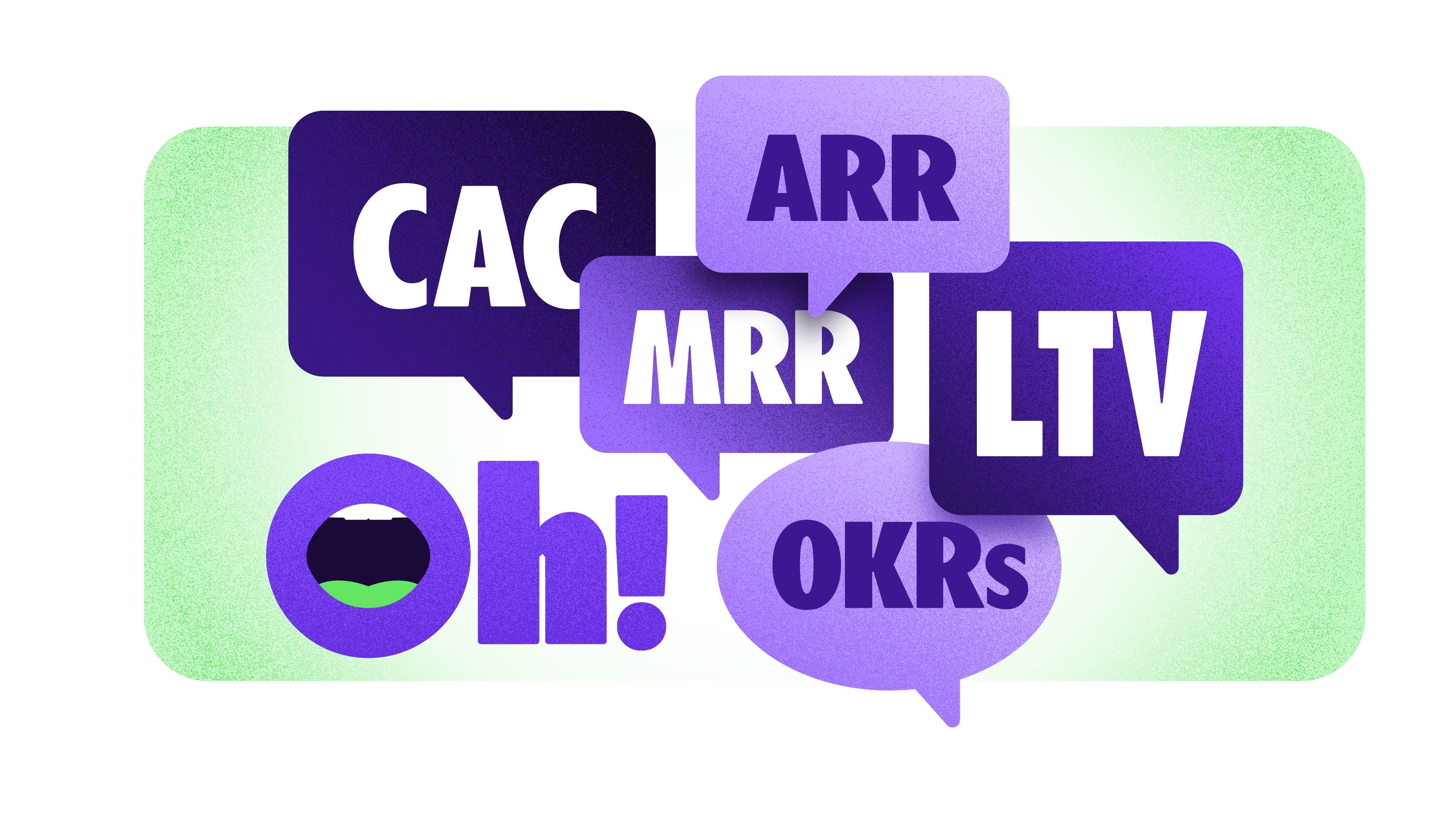
The key to building your strategic fluency is seeing where the other side is coming from. There's no need to rush off and abandon the values that got you where you are as a designer. You can still believe that clear communication matters while also recognizing that the use of acronyms isn't business theatre or big talk. It's a shared mental model.
Every leadership team speaks in shorthand: CAC, LTV, ARR, TAM, OKRs. In just a few letters, leadership and strategy teams can represent millions in revenue, months of planning, and at least one presentation deck no one wants to revisit. When a Chief Marketing Officer mentions "Churn is eating into our MRR," they're really communicating an entire analysis using fewer characters than a success message. As designers, we can appreciate that level of simplicity.
What might look like executives saving a few seconds is actually something more intentional. Strategic language helps teams maximize time and reach alignment faster. Acronyms and their shared understanding signal that everyone at the table is operating from the same goals, the same trade-offs, and the same urgency.
Speaking both languages
By becoming bilingual designers, we can help move the needle in the right direction. When the CEO says "our CAC is climbing," a bilingual designer doesn't just pretend to write on a sticky note—they ask, "are we attracting the wrong people or losing the right ones?" It's those types of questions that actually influence roadmap decisions and demonstrate the kind of expertise that gets the room onboard.
To get there, we need to stop looking at business fluency as a wall and start seeing it more like a door. Becoming fluent unlocks greater design acumen in addition to improving stakeholder buy-in. You begin to understand your client's point of view better, leading to stronger decision making that leaves everyone happier. It's important to recognize that influence works the same way good design does: by meeting people where they are.
We know this kind of dual thinking is valuable, but it's also rare. It separates designers who are strong at execution from designers who are great at influence. If you've ever delivered work to a client whose feedback was that it "looks nice" but "doesn't solve for X", this is a language gap in action. Beautifying a client's needs is great for grabbing attention, but at the end of the day they need a partner who understands their problem set and provides solutions.
The bridge
When creative thinking and strategic thinking are able to meet at the same table, incredible products get built. As designers, we will always care about the people who use what we build. It's the way we advocate, the rooms we're in, and how we show up in conversation that depends on our ability to speak more than one language.
Share it with your peeps
Some more good reads
How Motion Design Enhances User Experience

AI killed the SEO star: Content’s tragic flaw, AI’s blow to businesses

